



In recent years, Asian stock markets have grabbed the attention of investors, analysts, and global financial strategists. With rapid digital transformation, evolving investor behavior, macroeconomic pressures, and technological disruption, FTAsiaStock Market Trends from FinTechAsia—as highlighted by FinTechAsia—paint a complex yet fascinating picture of the region’s financial pulse. This article explores these trends deeply, unpacking what’s happening, why it matters, and where Asia’s stock FTAsiaStock Market Trends from FinTechAsia may be heading.
We’ll break this down naturally and expertly. Whether you’re a seasoned investor, a fintech enthusiast, or simply curious about Asian FTAsiaStock Market Trends from FinTechAsia , this guide will give clarity, insight, and informed context on the trends dominating FTAsiaStock Market Trends from FinTechAsia dynamics today.
Introduction to FTAsiaStock: What It Represents and Why It Matters
Asian financial markets are no longer backbench players in global investing—they are at the forefront. The term FTAsiaStock Market Trends from FinTechAsia, in this context, refers to financial trends and insights emerging from Asia’s stock FTAsiaStock Market Trends from FinTechAsia , particularly those covered by fin-tech media like FinTechAsia.
FTAsiaStock Market Trends from FinTechAsia isn’t a single index. Instead, it’s a broader lens on how Asian equity FTAsiaStock Market Trends from FinTechAsia behave, the forces shaping them, and how investors respond.
First, Asia’s economic output continues growing faster than many developed regions. Countries such as China, India, Japan, South Korea, and Southeast Asian economies account for a significant portion of global GDP and trade. That influence naturally extends into equity FTAsiaStock Market Trends from FinTechAsia, with major exchanges like the Shanghai Stock Exchange, Tokyo Stock Exchange, and India’s National Stock Exchange drawing international attention.
Second, the rise of retail investing in the region has altered FTAsiaStock Market Trends from FinTechAsia dynamics. Platforms that blend fintech innovation with stock trading have created a new generation of investors, impacting volumes and price movements in ways that were once dominated by institutional players alone.
Third, the connectivity between global FTAsiaStock Market Trends from FinTechAsia means what happens in Asia doesn’t stay in Asia. Changes in FTAsiaStock Market Trends from FinTechAsia trends often signal broader economic shifts, making this subject vital for anyone tracking international finance.
Understanding these basics sets the stage for deeper analysis later in this article.
The Rise of Retail Investors: A New Force in Asia’s Stock Markets

One of the most transformative trends shaping Asian FTAsiaStock Market Trends from FinTechAsia is the surge of retail investors. Thanks to fintech platforms and mobile access, millions of first-time investors across Asia now participate in the stock market.
Digital Platforms: Lowering the Barrier to Entry
FinTechAsia reports regularly highlight how digital brokerages and mobile trading apps have democratized investing. What once required significant capital and financial literacy now takes minutes and modest funds. Countries like India and Indonesia have seen exponential growth in active retail accounts over the last few years.
This has several implications:
- Increased Trading Volume: More participants mean more trades, leading to deeper and more liquid markets.
- Behavioral Shifts: Retail investors often behave differently than institutions—sometimes more speculative, driven by social media trends, or influenced by local news cycles.
- Market Democratization: Investing is no longer only for the wealthy or institutional class; it’s now a mainstream activity for urban millennials and Gen Z across Asia.
Volatility and Emotional Markets
While retail participation increases liquidity, it also introduces volatility. FinTechAsia’s analyses show that retail-driven FTAsiaStock Market Trends from FinTechAsia can react sharply to events—real or perceived. Memetic trading trends, rapid herd behavior, and sentiment-based swings have become more common.
For example:
- A trending stock on social platforms may surge rapidly and then correct just as quickly.
- News events—economic, political, or corporate—can trigger swift retail reactions that widen price movements.
However, this volatility isn’t inherently negative. It reflects an engaged investor base and creates opportunities for traders who understand behavioral trends.
Financial Literacy: A Key Challenge
With the rise of retail investors, financial literacy becomes critical. Asia’s markets must equip new investors with education on risk management, valuation basics, and long-term strategy. Without this, FTAsiaStock Market Trends from FinTechAsia participation may lead to uninformed decisions, potential losses, and heightened financial stress for individuals.
Regulators, fintech firms, and financial media are gradually stepping in to fill this gap—making financial literacy a key trend to watch.
Technology Integration: AI, Big Data, and Algorithmic Trading
If digital platforms reshaped who invests, then technology itself is reshaping how markets operate.
The Advent of AI and Machine Learning
Artificial intelligence and machine learning have revolutionized trading and FTAsiaStock Market Trends from FinTechAsia analysis worldwide—and Asia is no exception. FinTechAsia highlights how AI algorithms now assist portfolio managers, hedge funds, and retail platforms in spotting patterns, reducing risk, and automating trades.
These systems analyze vast real-time data:
- Price movements
- Economic indicators
- Social sentiment
- News feeds
- Historical trends
This depth of analysis was unimaginable a decade ago. Now, machine intelligence helps identify opportunities faster than manual approaches.
Big Data: Insights and Predictive Analytics
Big data platforms consolidate information from multiple sources—financial statements, FTAsiaStock Market Trends from FinTechAsia feeds, social media, and even alternative data like satellite imagery or foot traffic patterns. Traders use this to predict FTAsiaStock Market Trends from FinTechAsia trends with higher confidence.
For example, if multiple data streams show increased activity at manufacturing hubs, FTAsiaStock Market Trends from FinTechAsia models might predict stronger economic growth in that region, potentially impacting stock prices positively.
Big data is not only useful for large institutions; some fintech firms now offer data insights to retail traders, leveling the playing field.
Algorithmic Trading: Speed & Precision
Algorithmic trading has been part of FTAsiaStock Market Trends from FinTechAsia for years, but its influence in Asia continues to grow. High-frequency trading firms can execute thousands of orders in milliseconds, capitalizing on tiny price inefficiencies.
This impacts:
- Market liquidity
- Spread tightening
- Price discovery mechanisms
However, algorithmic trading also adds complexity—requiring robust infrastructure, careful regulations, and risk monitoring to prevent flash crashes or systemic issues.
Technology isn’t just a trend; it’s the backbone of modern Asian equity FTAsiaStock Market Trends from FinTechAsia.
Regulatory Shifts: Governments Balancing Growth and Stability
As FTAsiaStock Market Trends from FinTechAsia evolve, so do regulations. Asian governments have adopted diverse approaches to manage their financial ecosystems. These regulatory decisions materially affect FTAsiaStock Market Trends from FinTechAsia trends.
China’s Tightened Oversight
China provides a compelling example. Over the past few years, authorities have increased oversight on tech companies, data privacy, and FTAsiaStock Market Trends from FinTechAsia operations. These regulatory changes have sometimes rattled investors, leading to volatility across Chinese equities.
However, tighter regulation also seeks to ensure market integrity, protect investors, and fend off systemic risk. Investors who appreciate these long-term goals may view short-term instability as a trade-off for sustainable growth.
India’s Pro-Market Reforms
India has focused on improving market participation:
- Streamlining tax policies
- Encouraging IPO activity
- Enhancing transparency
- Supporting fintech growth
The result? A bustling IPO pipeline, record retail participation, and a more dynamic stock market ecosystem.
Southeast Asia: Harmonizing With Global Standards
Emerging markets like Singapore, Malaysia, and Vietnam increasingly align regulations with global best practices. This includes:
- Strengthening anti-fraud measures
- Enhancing disclosure requirements
- Protecting minority investors
Such regulations enhance confidence among foreign institutions considering Asian equities for diversification.
Regulatory shifts can be disruptive, but they also bring structure—an essential foundation for long-term market development.
Macro Trends: Inflation, Interest Rates, and Global Interdependence
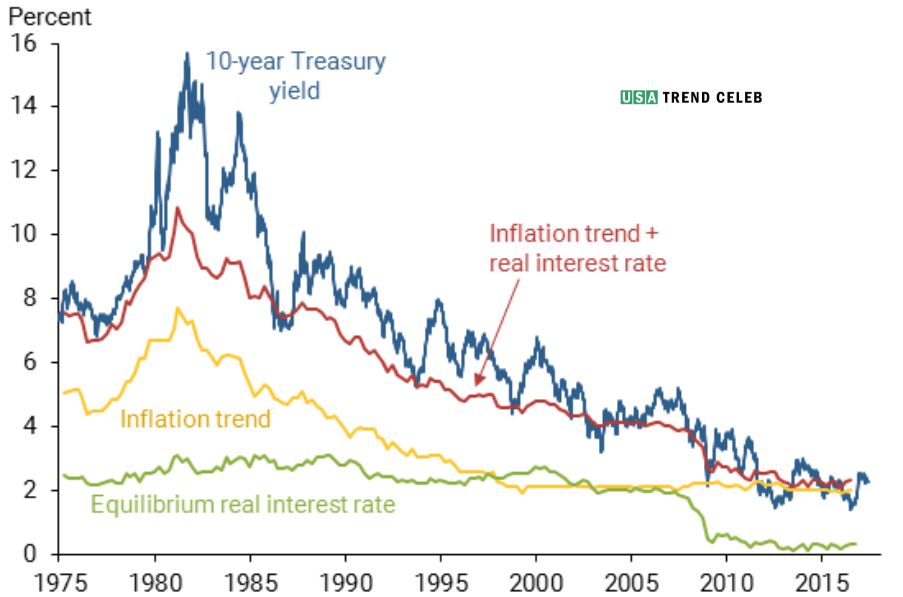
No discussion of FTAsiaStock Market Trends from FinTechAsia trends is complete without acknowledging the broader macroeconomic forces at play.
Inflation and Monetary Policy
Post-pandemic inflationary pressures have affected economies worldwide. Central banks—whether in Tokyo, New Delhi, or Beijing—have had to balance inflation control with economic growth.
Interest rates play a key role in stock market performance because:
- Higher rates can cool down economic activity
- Investors may shift preferences from equities to bonds
- Corporate borrowing costs increase
These dynamics influence investor sentiment and equity valuations across Asian markets.
Supply Chain Resilience and Economic Recovery
Global supply chain challenges—stemming from geopolitical tensions, natural disasters, and logistical bottlenecks—impact individual companies and broader equity indices. Many Asian economies are both manufacturing hubs and export-oriented, making them sensitive to external disruptions.
Yet, they also innovate solutions. Diversification of supply routes, investments in logistics technology, and regional cooperation are gradually strengthening resilience.
Global Interdependence and Capital Flows
Asian stock markets are no longer insular. Global institutional investors allocate capital across regions. When developed markets experience volatility, capital often flows into or out of Asian equities based on risk appetite and valuation assessments.
Currencies, trade balances, and geopolitical events all influence these capital movements.
Understanding these macro trends is crucial for anyone interpreting FTAsiaStock Market Trends from FinTechAsia behavior.
Sectoral Shifts: Where the Growth Is Happening
Some sectors in Asia are growing faster than others—and individual market trends reveal these shifts.
Technology and Innovation
Unsurprisingly, tech stocks dominate headlines. Companies involved in:
- Semiconductors
- Cloud computing
- Fintech solutions
- E-commerce
- Digital services
are central to growth narratives. China, South Korea, Japan, and India all have tech ecosystems with global exposure.
Green Energy and Sustainability
Asia’s energy transition is accelerating. Governments and corporations increasingly invest in renewable infrastructure, electric mobility, and carbon-reduction initiatives. These shifts influence stock valuations in:
- Solar and wind producers
- Battery and EV supply chains
- Sustainable commodities
Investors view sustainability not just as a moral imperative but as a long-term value driver.
Healthcare and Biotech
The pandemic spotlighted the importance of healthcare infrastructure and innovation. Countries like Singapore and South Korea are cultivating biotech ecosystems, attracting capital, and seeing strong market interest.
Understanding sectoral trends helps investors rotate portfolios effectively and spot opportunities beyond headline indices.
Asia vs. Global Markets: Correlations, Divergences, and Opportunities
Asian markets don’t move in isolation—but they also don’t always follow Western trends.
Correlation With Global Indices
Certain patterns—like responses to U.S. rate decisions or global commodity shifts—create correlations. However, local fundamentals often override global sentiment.
For example:
- A strong domestic economy can buoy equities even when global markets lag.
- Local policy support for key sectors may insulate Asian markets from broader sell-offs.
Understanding these correlations is essential for macro investors and portfolio allocators.
Unique Divergences
Asia’s demographics—youthful populations, rising middle class, and increasing digital adoption—create consumption and innovation trends sometimes absent in developed markets.
This means investors can find growth pathways in Asia that may not exist elsewhere.
Opportunities for Diversification
From a risk-management perspective, including Asian equities in global portfolios enhances diversification. Variations in sector exposure, currency movements, and economic cycles provide a cushion against concentrated risks.
Recognizing both parallels and differences between Asia and global markets improves investment outcomes.
The Future Outlook: What’s Next for FTAsiaStock Trends
Predicting markets is never foolproof—but we can identify key indicators likely to shape Asia’s equity landscape.
Continued Digital Transformation
Technology adoption will deepen. We can expect:
- Better analytical tools for investors
- Enhanced trading platforms
- Broader access to global markets from within Asia
- More fintech startups driving innovation
These shifts should increase market efficiency and investor engagement.
Policy Evolution and Economic Reforms
Governments looking to attract capital will refine regulations, incentivize investment, and protect market integrity. This mature regulatory environment supports growth and sustainability.
Regional Cooperation and Trade Integration
Asian economies are increasingly collaborating—through trade pacts, shared infrastructure initiatives, and financial cooperation. These developments strengthen economic prospects and underpin bullish market expectations.
While challenges remain—global tensions, inflation risks, and technological dependencies—the general trajectory points toward robust long-term growth.
Final Thoughts
The FTAsiaStock market trends from FinTechAsia highlight one clear reality: Asia’s financial markets are evolving faster than ever before. From the rise of retail investors and deep fintech integration to shifting regulations and powerful macroeconomic forces, the region is no longer just following global markets—it’s actively shaping them.
What makes Asia especially compelling is its diversity. Each market operates within its own economic, cultural, and regulatory framework, yet they are increasingly interconnected. This creates both challenges and opportunities for investors who are willing to look beyond surface-level movements and understand the deeper forces at play.
Looking ahead, innovation, digital adoption, and long-term structural growth are likely to remain the key drivers of Asian equities. While short-term volatility is inevitable, the broader trajectory suggests resilience and expanding influence on the global stage. For anyone tracking international finance, keeping an eye on FTAsiaStock trends through platforms like FinTechAsia isn’t just useful—it’s essential.
Related Topics: French Riviera Fashion Style: The Ultimate Guide to Timeless Coastal Elegance
(FAQs) About FTAsiaStock Market Trends from FinTechAsia
1. What exactly does “FTAsiaStock market trends” mean?
It refers to stock market behavior and developments in Asia, as analyzed and reported by financial technology outlets like FinTechAsia. This includes performance patterns, investor behavior, tech integration, regulatory impact, macroeconomic influences, and sectoral shifts.
2. Why are retail investors so influential in Asian markets?
Retail investors now have access to low-barrier digital trading platforms, empowering millions to trade stocks. Their collective participation increases liquidity, introduces unique trading patterns, and sometimes drives noticeable volatility in specific stocks or sectors.
3. How does technology affect stock market trends in Asia?
Technology—especially AI, big data analytics, and algorithmic trading—enhances market efficiency, improves analytical capabilities, and enables faster trading execution. It also democratizes access to insights previously available only to institutional investors.
4. How important are macroeconomic factors in shaping Asian stock market trends?
Extremely important. Inflation, interest rates, supply chain dynamics, global capital flows, and geopolitical events all influence investor sentiment, valuations, and market volatility. These factors often play out differently in Asian contexts compared to Western markets.
5. Which sectors are likely to outperform in Asia’s markets?
Technology, sustainable energy, healthcare, and innovation-driven sectors show strong growth potential. These areas attract capital due to structural demand, policy support, and long-term growth prospects.
Related Topics:
